

These sets of articles offer methods from hundreds of hours of scientific trials for managing hive dynamics and maintaining colony health. It covers important topics like bee drift, mite migration, and seasonal population changes, offering insights on how these factors impact mite control, swarming, and hive organization. You can also learn how primer pheromones influence hive stability, and help you make informed decisions to manage mite spread, support strong colony buildup, and maintain hive stability through pheromone-driven bee behaviors.
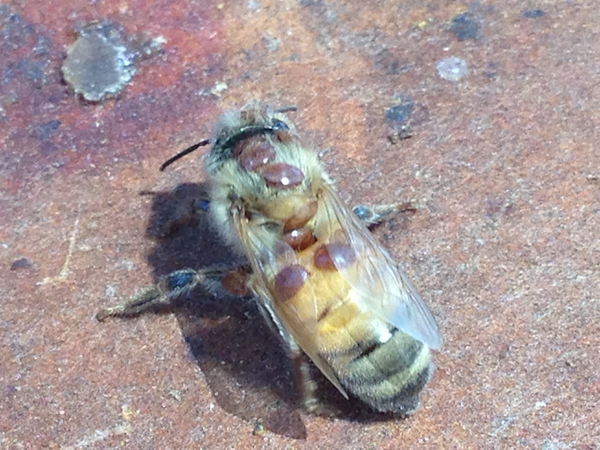
Allow me to start with an excellent assessment by Bee Culture’s Phil Craft (BC July 2015):
Perhaps beekeepers who have come to the craft in the last few decades aren’t aware of the effect varroa had when it first arrived on this continent and of how it earned its full name, Varroa destructor. Whatever the reason, every year, beekeepers all over the country lose colonies to mites and the viruses of which they are carriers, and they never know what hit them. They blame pesticides,or CCD, or habitat loss, and sometimes those really are causes, or at least significant factors. However, too, too often, the underlying cause is a lack of effective management, which allows a mite infestation to overwhelm a colony or weaken it to the point that it succumbs easily to other stressors. The most frustrating thing about these losses is that they don’t have to happen.
Watch Dennis vanEngelsdorp explain why mite management is critical for colony survival, and which methods work or don’t at https://www.youtube.com/watch?v=4bm3Y4t1NwQ
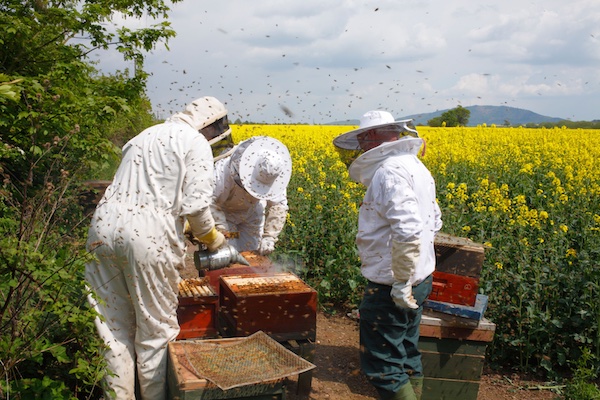
Colony Health - Diseases, Viruses, CCD
This section offers practical strategies for preparing strong colonies for almond pollination with an emphasis on early colony buildup, proper nutrition, and Varroa management. In particular, late-summer brood rearing, supplemental pollen feeding, and controlled Varroa treatments to ensure colonies are at peak strength by February. You’ll also find tips for monitoring hive weight and preventing overcrowding, ensuring both successful pollination and sustainable colony health.
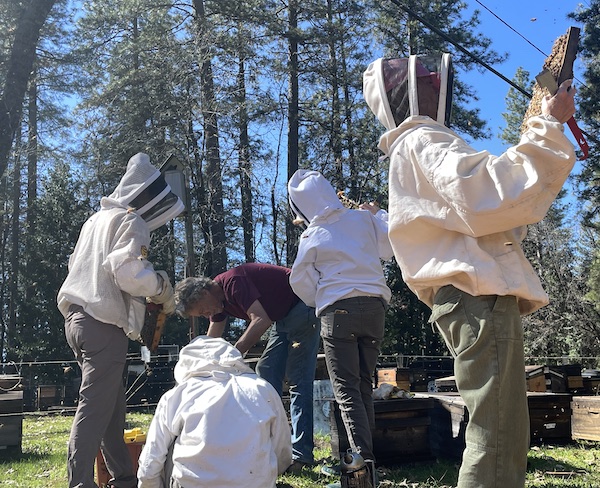
Beginner's Pages and Pollinator Helpers