
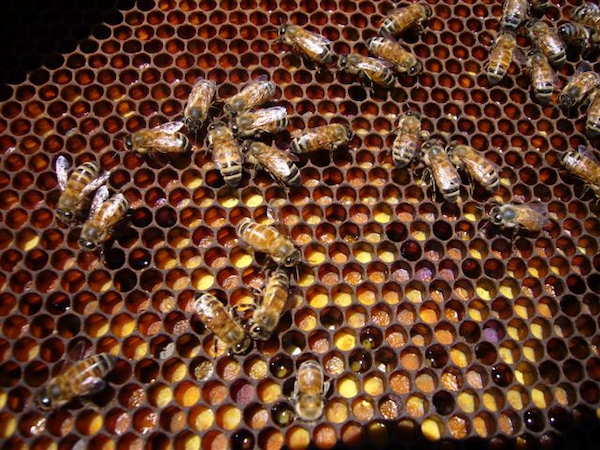
Bee Behavior and Biology
These sets of articles offer methods from hundreds of hours of scientific trials for managing hive dynamics and maintaining colony health. It covers important topics like bee drift, mite migration, and seasonal population changes, offering insights on how these factors impact mite control, swarming, and hive organization. You can also learn how primer pheromones influence hive stability, and help you make informed decisions to manage mite spread, support strong colony buildup, and maintain hive stability through pheromone-driven bee behaviors.
Understanding Colony Buildup and Decline: Part 6 – Hiccups in Colony Linear Buildup
Understanding Colony Buildup and Decline – Part 6 Hiccups in Colony Linear Buildup Randy Oliver ScientificBeekeeping.com First Published in ABJ in July 2015 CONTENTS Return To Playing Catch Up Real World Hiccups The Effect Of Cold Weather The Effect Of Rainy Weather Spring Starvation From Too Little To Too Much Brood Survivorship Adult Survivorship Take...
Understanding Colony Buildup and Decline: Part 7a – The Swarming Impulse
Understanding Colony Buildup and Decline – Part 7a The Swarming Impulse Randy Oliver ScientificBeekeeping.com First Published in ABJ in Aug 2015 CONTENTS The Swarming Impulse Terminology Reproductive Swarming And Emergency Swarming The Effect Of Swarming Upon The Colony Predicting Swarming Issuance Of The Swarm Acknowledgements References One of the main challenges of keeping bees for...
Understanding Colony Buildup and Decline: Part 7b – Minimizing Swarming
Understanding Colony Buildup and Decline – Part 7b Minimizing Swarming Randy Oliver ScientificBeekeeping.com First Published in ABJ in Sep 2015 CONTENTS The Beekeeper’s Dilemma The Reproductive Urge It’s Not Just Crowding Cues And Thresholds Involved In The Swarming Impulse The Condition Of The Broodnest And Amount Of Open Comb Backfilling Availability Of Empty Drawn Comb...
Understanding Colony Buildup and Decline: Part 8 – The Main Honey Flow
Understanding Colony Buildup and Decline: Part 8 The Main Honey Flow Randy Oliver ScientificBeekeeping.com First published in ABJ Oct and November 2015 The moment has now arrived for our honey bees to earn their name. Unlike other insects in temperate climates, the honey bee maintains an elevated body temperature throughout the frigid winter. It does...
Understanding Colony Buildup and Decline: Part 9a – The Regulation of Bee Longevity
Understanding Colony Buildup and Decline: Part 9a The Regulation Of Bee Longevity Randy Oliver ScientificBeekeeping.com First Published in ABJ in January 2016 CONTENTS The Business Model Of The European Honey Bee The Phases Of Colony Life Cycle It’s All About Most Efficient Use Of Resources Reversing The Question The Regulation Of Aging The Honey Bee...
Understanding Colony Buildup and Decline: Part 9b – The Regulation of Bee Longevity
Understanding Colony Buildup and Decline: Part 9b The Regulation of Bee Longevity Randy Oliver Scientific Beekeeping First Published in ABJ in February 2016 In the first part of this article, I looked at the regulation of the lifespan of the long-lived “winter” (diutinus) bees. Now it’s time to turn to the question of why “summer...
Understanding Colony Buildup and Decline: Part 10- Summer Downsizing and Varroa
Understanding Colony Buildup and Decline: Part 10 Summer Downsizing And Varroa Randy Oliver ScientificBeekeeping.com First Published in ABJ in March 2016 At this point in time, the desperate intensity of spring buildup has long since passed, swarming season is over, and the colony has had its chance to use the main honey flow to put...
Understanding Colony Buildup and Decline: Part 11 – Varroa and Late Season Collapse
Understanding Colony Buildup and Decline: Part 11 Varroa and Late Season Collapse Randy Oliver ScientificBeekeeping.com First Published in ABJ in April 2016 I’m writing this article shortly after moving my hives to almond pollination. The supply of strong, healthy hives was short this season, but that came as no surprise. I’d heard reports from all...
Understanding Colony Buildup and Decline: Part 12 – Late Summer Through Autumn
Understanding Colony Buildup and Decline: Part 12 Late Summer Through Autumn Randy Oliver ScientificBeekeeping.com First Published in ABJ are June 2016 I took a slight detour in my last article to address the “other bug” that we keep in our hives—the varroa mite. I plan to soon return to the mite. But first, let’s get...
Understanding Colony Buildup and Decline: Part 13a – The Physics of the Winter Cluster
Understanding Colony Buildup and Decline Part 13a The Physics of the Winter Cluster Randy Oliver ScientificBeekeeping.com First published in ABJ July 2016 Updated in blue: 21 March 2019 In cold-winter locales, the temperature becomes too cool for workers to forage, and there is no nectar or pollen to be had anyway. In response, the...
Understanding Colony Buildup and Decline: Part 13b – The Winter Continued
Understanding Colony Buildup and Decline: Part 13b The Winter Continued Randy Oliver ScientificBeekeeping.com First published in ABJ August 2016 In the previous article I summarized the basic mechanics and physics of the winter cluster. But I still had some “leftovers” worthy of further discussion… The Optimal Size of the Winter Cluster I showed in Part...
Understanding Colony Buildup and Decline: Part 13c – The Winter, and Hive Design
Understanding Colony Buildup and Decline: Part 13c The Winter, and Hive Design Randy Oliver ScientificBeekeeping.com First Published in ABJ in September 2016 I begin the process of writing most of my articles thinking that I’ll cover the subject in a single piece. Next thing I know, I’ve got so many notes that I realize that...
Understanding Colony Buildup and Decline: Part 13d – The Impacts of Parasites and CO2
Understanding Colony Buildup and Decline: Part 13d The Impacts of Parasites and CO2 Randy Oliver ScientificBeekeeping.com First published in ABJ October 2016 Winter is the most stressful time for the honey bee colony, and during times of stress, some parasites find opportunity in the hive. How can a beekeeper help his/her bees? The honey bee...
Overwintering of Honey Bee Colonies
Overwintering of honey bee colonies This subject has long generated endless debate among beekeepers. There are a few excellent resources by those who have collected hard data: Dr. Floyd Moeller was a USDA researcher who performed extensive field research to test various beekeeping management practices. This excellent publication covers practices to improve overwintering success, and...
The Nosema Problem: Part 7C – The Prevention of Dysentery
Contents Review.. 1 Balancing moisture elimination and heat loss. 2 Broodrearing in the winter cluster. 3 So let’s do the arithmetic!. 5 Practical applications. 5 Optimal Cluster size. 5 Winter stores ― honey and beebread. 8 Hive placement. 8 Hive insulation. 9 Hive ventilation. 10 Literature cited. 11 The Nosema Problem Part 7c The Prevention...
ScientificBeekeeping is a not-for-profit enterprise. Our motivation is the notes of appreciation that we received from beekeepers worldwide, thanking us for how valuable my information has been to them. All donations go towards website maintenance, my hired help, research costs (thousands of dollars per year), and some re-donated to noteworthy projects by other groups. I guarantee that every penny is pinched and well spent!

Click on the banners above to go directly to these sponsors’ websites. Thanks to them and the supportive beekeepers below, you can enjoy this website without annoying popup ads!
REGULAR SERIOUS DONORS
Tracy Fasanella
Brandon Hertel
Homestead in the Hood, ColoradoKaren Barnhart, Iowa
Jean KnudsenDaleLesser, Michigan
Conway Veterinary Hospital
Matthew McLean, Colorado
Jim & Paulette Lynn, Iowa
Yumei Xiong
Thomas Kirwan
Andrew Dewey, Maine
Madeline Mead
Jill Lambie-ponce
RECENT MAJOR SUPPORTERS
John Gaut
James Jakim, Pennsylvania
Los Angeles County Beekeepers
Justin Ray
Alameda County Beekeepers Association, CA
Santa Clara Valley Beekeepers Guild, CA
Ihor Skrypka
Mike Tooley
Chatham County Beekeepers Association
Darren Tressider
Charles Clark
Victorian Apiarists’ Association
Peter Krey
Chrisensen Family Apiaries, Michigan
Nebraska Beekeepers Assoc.
Hiatt Honey LLC
Miller Honey Farms, California
Paul Hosticka, Washington
Tualatin Valley Beekeepers Association, Oregon
Merrimack Valley Beekeepers, NH
Colorado State Beekeepers Assoc.
Alameda County Beekeepers Assoc, Calif
New Mexico Beekeepers Assoc
Colonial Beekeepers Assoc, Virginia
Help Save the Bees Foundation, Nevada
James Jakim, Pennsylvania
RECENT $100+ SERIOUS SUPPORTERS
Rick Hyde
Mohawk Valley Trading Company
Ron Morrison
Susan Ament
Richard Reid
San Mateo Bee Guild, California
Zach Suddaby
Cara Ching, California
Vincent Aloyo, Pennsylvania
Rick Anderson, Kansas
Perry County Beekeepers Club
Lawrence Huba
Charles Reichert
Charles Clark
Charlean Andes
Always Summer Herbs, Florida
Bill Hall
David George
Dean Christie
Roy Manicke
Jersey Cape Beekeepers Association
Kansas Honey Producers Association
New Hampshire Beekeepers Association
Chester County Beekeepers Assoc, Pennsylvania
Debbie Hewitt, Maryland
Mile Hive Bee Club, Colorado
Dale Lesser, Minnesota
Santa Clara Valley Beekeepers Guild, California
Stevan Huffman, Alaska
Flower Street Farm
Cara Ching, California
Terry Barrett
Robert M Simonson
Vincent Aloyo, Pennsyvania
Byron Godard
Southern Oregon Beekeepers Association
Lawrence Chismar
Middlesex Beekeepers Association, Massachusetts
Montgomery County Beekeepers, Maryland
Charles Clarke, California
Andrew Dewey
Ralph Carter, California
Barnstable County Beekeepers Association
Mary Aho
Sonja Percival
New York Bee Wellness
Liz and Terry Huxter
David Ball
Paul W. Garges
Andrew Levi
Jim Veitch, California
Mark Simonitsch, Massachusetts
Kenneth Sallitt
Kelle Frymire
Tamiko Panzella, California
Rodd Hall, Wisconsin
James Baerwald
Jean Knudsen
Yosef Shochat, Israel
Nicolas Geant
Charles Clark
Merrimack Valley Beekeepers
Michael Cummings
Bryce Lord
Jersey Cape Beekeepers
Busy Bee Honey, Vermont
Rick Anderson
Steve Sweet, Idaho
Ulster County Beekeepers Association
Jan Lawson
Honey Bee Club of Stillwater, Minnesota
Black Hills Area Beekeeping Club, South Dakota
Richard Ozero, Alberta
Paul Yanus, Vermont
Suddabees Honey LLC
Dean Christie
New Hampshire Beekeepers Association
Jane Sebring
Vincent Aloyo
Connecticut Beekeepers Association
Jim Lyssy
Wyoming Beekeepers Association
Tualatin Valley Beekeepers, Oregon
Yosef Shochat
Dale Lesser
Jill Lambie-ponce
Deborah Corcoran
Justin Ray
Idaho Honey Producers Association
Capital Area Beekeepers Association, PA
Mark Simonitsch, MA
Central Maryland Beekeepers Association
Roy Manicke
Kansas Honey Producers Association
Charles Bailey Jr
Richard Reed
Gregory Quinn
John Allison
Joshua Sewell
Chris Abbot, Virginia
Owyhee Honey Company
Idaho Honey Ranch
Mount Diablo Beekeepers Association, California
Charles Bailey Jr
Raritan Valley Beekeepers Association
Mike Tooley
Los Angeles County Beekeepers Association
Santa Clara Valley Beekeepers Guild
Pamela Stegemerten
Vermont Beekeepers Association
Los Angeles County Beekeepers Association
Michael Kurtz
Dan Geer
Ross Honey Company
Steven Greenwood
Julie Spezia
Stephen Lamb, California
Pam Rogers, Indiana
El Dorado Beekeepers, California
Bill Mares, Vermont
Mike Stoops
Adam Bagerski, Oregon
Dorothy Hammett
Janine Cohen, California
Neil Nordquist, California
Richard Hyde, California
Bonnie Bee & Co., California
Merrimack Valley Beekeepers Association, New Hampshire
Laura Risk, Colorado
Capital Area Beekeepers Association, Pennsylvania
West Sound Beekeepers Association, Washington
Beekeepers’ Guild San Mateo, California
Omaha Bee Club, Nebraska
Joplin Area Beekeepers Association
Steve Sweet, Idaho
Bill’s Bees
Rich Blohm, New York
James Baerwald
Kip Glass, Missouri
Charles Vorisek
Carlos Perez, California
Debra Morey
Margaret Varney
Chester County Beekeepers Association, Pennsylvania
Thomas Dahl
Vince Aloyo, Pennsylvania
Charles Bureau
Help Save the Bees Foundation, Nevada
Aaron Bergman, Florida
Alan Herzfeld, Idaho
Eli’s Bees, California
Ghislain De Roeck, Belgium
Buncombe County Beekeepers, North Carolina
Robert Holcombe, Rhode Island
Alex Naumenko, Florida
Honey Bee Club of Stillwater, Minnesota
New Hampshire Beekeepers Association
Merrimack Valley Beekeepers, New Hampshire
Blossomwood Honey, Al
Bee Thankful Raw Honey
Skip Smith
Jean Knudsen
Jason Hough, Maryland
Tualatin Valley Beekeepers, Oregon
Craig Falls, New York
Michael Aaby, Maryland
Keith Scott
Randall Carter, Alabama
Thomas Kirwan
Nicolas Geant, California
Lee Bussy
Jean Knudsen
Andrew Dewey, Maine
Jason Wester, Michigan
Everything on this website is open access and freely given to beekeepers and researchers worldwide, on a not-for-profit basis. I gladly accept supportive personal gifts of appreciation from my readers. You can donate via Paypal below (or better yet via Venmo as a gift to @RandyOliverBeekeeper). I will treat all Paypal donations as “gifted grants to be applied towards beekeeping research” given by you with “detached and disinterested generosity out of affection, respect, admiration, charity or like impulses,” and not in the expectation of any goods or services. Since I am not a 501(c)(3), your gifts are not tax deductible.
Thank you and happy beekeeping!
Randy
Supporters
ScientificBeekeeping is a not-for-profit enterprise, and I’m happy to receive notes of thanks for how information on this site has contributed to my readers’ success at beekeeping (and sometimes saved them hundreds or thousands of dollars). It is your support that allows me to devote my life to this site. All donations go towards website maintenance, bee research costs (typically tens of thousands of dollars per year), re-donations to fund research by others, and a small amount to partially offset the huge number of hours that I spend in research and writing. I guarantee that every penny is pinched and well spent!
I appreciate the notes of support that I receive from all over the world. Seeing who is donating, their locations, and the little notes that come with contributions help to let me know how I should direct my research and writing. In appreciation, and in order to show who is supporting my research and writing, I honor below those who have recently made substantial donations:
REGULAR SERIOUS DONORS
Tracy Fasanella
Brandon Hertel
* Homestead in the Hood, Colorado
DaleLesser, Michigan
Conway Veterinary Hospital
Matthew McLean, Colorado
Jim & Paulette Lynn, Iowa
Jean Knudsen
Yumei Xiong
Thomas Kirwan
Madeline Mead
Jill Lambie-ponce
RECENT MAJOR SUPPORTERS
Tualatin Valley Beekeepers, Oregon
Denis Watts
Kebin Duesman
James Jakim, Pennsylvania
Los Angeles County Beekeepers
Justin Ray
Alameda County Beekeepers Association, CA
Santa Clara Valley Beekeepers Guild, CA
Ihor Skrypka
Mike Tooley
Chatham County Beekeepers Association
Darren Tressider
Charles Clark
Victorian Apiarists’ Association
Peter Krey
Chrisensen Family Apiaries, Michigan
Nebraska Beekeepers Assoc.
Hiatt Honey LLC
Miller Honey Farms, California
Paul Hosticka, Washington
Tualatin Valley Beekeepers Association, Oregon
Merrimack Valley Beekeepers, NH
Colorado State Beekeepers Assoc.
Alameda County Beekeepers Assoc, Calif
New Mexico Beekeepers Assoc
Colonial Beekeepers Assoc, Virginia
Help Save the Bees Foundation, Nevada
James Jakim, Pennsylvania
RECENT $100+ SERIOUS SUPPORTERS
Rick Hyde
Ron Morrison
Susan Ament
Richard Reid
San Mateo Bee Guild, California
Zach Suddaby
Cara Ching, California
Vincent Aloyo, Pennsylvania
Rick Anderson, Kansas
Perry County Beekeepers Club
Lawrence Huba
Charles Reichert
Charles Clark
Charlean Andes
Always Summer Herbs, Florida
Bill Hall
David George
Dean Christie
Roy Manicke
Jersey Cape Beekeepers Association
Kansas Honey Producers Association
New Hampshire Beekeepers Association
Chester County Beekeepers Assoc, Pennsylvania
Debbie Hewitt, Maryland
Mile Hive Bee Club, Colorado
Dale Lesser, Minnesota
Santa Clara Valley Beekeepers Guild, California
Stevan Huffman, Alaska
Flower Street Farm
Cara Ching, California
Terry Barrett
Robert M Simonson
Vincent Aloyo, Pennsyvania
Byron Godard
Southern Oregon Beekeepers Association
Lawrence Chismar
Middlesex Beekeepers Association, Massachusetts
Montgomery County Beekeepers, Maryland
Charles Clarke, California
Andrew Dewey
Ralph Carter, California
Barnstable County Beekeepers Association
Mary Aho
Sonja Percival
New York Bee Wellness
Liz and Terry Huxter
David Ball
Paul W. Garges
Andrew Levi
Jim Veitch, California
Mark Simonitsch, Massachusetts
Kenneth Sallitt
Kelle Frymire
Tamiko Panzella, California
Rodd Hall, Wisconsin
James Baerwald
Jean Knudsen
Yosef Shochat, Israel
Nicolas Geant
Charles Clark
Merrimack Valley Beekeepers
Michael Cummings
Bryce Lord
Jersey Cape Beekeepers
Busy Bee Honey, Vermont
Rick Anderson
Steve Sweet, Idaho
Ulster County Beekeepers Association
Jan Lawson
Honey Bee Club of Stillwater, Minnesota
Black Hills Area Beekeeping Club, South Dakota
Richard Ozero, Alberta
Paul Yanus, Vermont
Suddabees Honey LLC
Dean Christie
New Hampshire Beekeepers Association
Jane Sebring
Vincent Aloyo
Connecticut Beekeepers Association
Jim Lyssy
Wyoming Beekeepers Association
Tualatin Valley Beekeepers, Oregon
Yosef Shochat
Dale Lesser
Jill Lambie-ponce
Deborah Corcoran
Justin Ray
Idaho Honey Producers Association
Capital Area Beekeepers Association, PA
Mark Simonitsch, MA
Central Maryland Beekeepers Association
Roy Manicke
Kansas Honey Producers Association
Charles Bailey Jr
Richard Reed
Gregory Quinn
John Allison
Joshua Sewell
Chris Abbot, Virginia
Owyhee Honey Company
Idaho Honey Ranch
Mount Diablo Beekeepers Association, California
Charles Bailey Jr
Raritan Valley Beekeepers Association
Mike Tooley
Los Angeles County Beekeepers Association
Santa Clara Valley Beekeepers Guild
Pamela Stegemerten
Vermont Beekeepers Association
Los Angeles County Beekeepers Association
Michael Kurtz
Dan Geer
Ross Honey Company
Steven Greenwood
Julie Spezia
Stephen Lamb, California
Pam Rogers, Indiana
El Dorado Beekeepers, California
Bill Mares, Vermont
Mike Stoops
Adam Bagerski, Oregon
Dorothy Hammett
Janine Cohen, California
Neil Nordquist, California
Richard Hyde, California
Bonnie Bee & Co., California
Merrimack Valley Beekeepers Association, New Hampshire
Laura Risk, Colorado
Capital Area Beekeepers Association, Pennsylvania
West Sound Beekeepers Association, Washington
Beekeepers’ Guild San Mateo, California
Omaha Bee Club, Nebraska
Joplin Area Beekeepers Association
Steve Sweet, Idaho
Bill’s Bees
Rich Blohm, New York
James Baerwald
Kip Glass, Missouri
Charles Vorisek
Carlos Perez, California
Debra Morey
Margaret Varney
Chester County Beekeepers Association, Pennsylvania
Thomas Dahl
Vince Aloyo, Pennsylvania
Charles Bureau
Help Save the Bees Foundation, Nevada
Aaron Bergman, Florida
Alan Herzfeld, Idaho
Eli’s Bees, California
Ghislain De Roeck, Belgium
Buncombe County Beekeepers, North Carolina
Robert Holcombe, Rhode Island
Alex Naumenko, Florida
Honey Bee Club of Stillwater, Minnesota
New Hampshire Beekeepers Association
Merrimack Valley Beekeepers, New Hampshire
Blossomwood Honey, Al
Bee Thankful Raw Honey
Skip Smith
Jean Knudsen
Jason Hough, Maryland
Tualatin Valley Beekeepers, Oregon
Craig Falls, New York
Michael Aaby, Maryland
Keith Scott
Randall Carter, Alabama
Thomas Kirwan
Nicolas Geant, California
Lee Bussy
Jean Knudsen
Andrew Dewey, Maine
Jason Wester, MIchigan